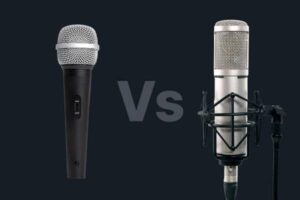
If you are planning to start your home recording journey, one of the most critical decisions you will face is choosing between a Condenser Microphone and a Dynamic Microphone. For a beginner, this choice can be confusing because both look similar but work very differently.
The answer to “Which is better?” isn’t one-size-fits-all. It depends on your room’s acoustics, your budget, and whether you are recording a podcast, singing, or doing voice-overs. In this guide, we will break down the differences to help you build the perfect home studio.
The Core Difference: How They Work
At their heart, all microphones convert sound waves into electrical signals, but they use different “transducer” technologies to do it.
- Dynamic Microphones: These use a simple diaphragm, coil, and magnet mechanism (like a speaker in reverse). They are rugged and don’t need external power.
- Condenser Microphones: These use a thin, gold-sputtered diaphragm placed next to a backplate to create a capacitor. Because they are more complex, they require
- from an audio interface or battery.

Microphone Comparison Table
| Technology | Capacitor based (Sensitive) | Moving Coil (Rugged) |
| Best For | Studio Vocals, Acoustic Guitar | Podcasting, Live Stage, Drums |
| Sensitivity | Very High | Low to Medium |
| Background Noise | Picks up easily | Rejects background noise |
| Power Requirement | Needs +48V Phantom Power | None (Plug & Play) |
| Durability | Fragile (Handle with care) | Extremely Tough |
When to Choose a Condenser Microphone?
Condenser microphones are the “HD Cameras” of the audio world. They are designed to capture the “crispness” and “air” in a human voice.
Best Use Cases:
- Studio Vocals: If you are a singer, a condenser mic will capture the emotions and nuances in your performance.
- Acoustic Instruments: Perfect for recording acoustic guitars or violins where detail is key.
- Voice-overs: If you have a soundproof room, this will make your voice sound professional and “expensive.”

Top Recommendation: The Fifine K669B is an excellent entry-level condenser mic that connects via USB, making it perfect for beginners who don’t have an audio interface.
When to Choose a Dynamic Microphone?
Dynamic microphones are the “Workhorses.” They are less sensitive, which—believe it or not—is actually a huge advantage for most home recorders.
Best Use Cases:
- Untreated Rooms: If you record in a bedroom with fan noise or street traffic, a dynamic mic will ignore that noise and focus only on your voice.
- Podcasting: Most pro podcasters prefer dynamic mics because they give that warm, “radio-host” broadcast sound.
- Loud Sources: Great for recording electric guitar amps or loud drums.
Top Recommendation: The Shure SM58 is the world’s most famous dynamic mic. It is nearly indestructible and delivers a very warm, professional tone.
Sound Quality and Room Acoustics
The biggest mistake beginners make is buying a high-end condenser mic and recording in a room with echoes.
Condenser Mics in Bad Rooms: Will sound “roomy” and echoey. You will hear every click of your mouse and the hum of your PC fan.
Dynamic Mics in Bad Rooms: Will sound much cleaner because they have “Off-axis rejection,” meaning they don’t pick up sound from the sides and back as much.
Budget and Setup Requirements
USB Setup: If you want to keep it simple, look for a USB version of either mic. They have a built-in “sound card.”
XLR Setup: Professional mics use XLR cables. You will need an Audio Interface (like a Focusrite Scarlett) to connect these to your computer.
Conclusion: The Final Verdict
- Choose a Condenser Microphone if you have a quiet, carpeted room and want the highest possible detail for singing or high-end YouTube videos.
- Choose a Dynamic Microphone if you record in a normal room with some noise and want a reliable, easy-to-use mic for podcasting or streaming.
No matter which one you choose, the most important thing is to start recording. Your skills in editing and mic technique will eventually matter more than the gear itself.
Frequently Asked Questions (FAQs)
Can I use a condenser mic for podcasting?
Yes, but only if your room is very quiet. If you have a loud family or live near a busy road, a dynamic mic is safer.
Do I need a pop filter for both?
Yes. Both mics can suffer from “Plosives” (the ‘P’ and ‘B’ sounds). A pop filter is a cheap way to instantly improve your sound.
Which one lasts longer?
Dynamic microphones are much more durable. They can often survive being dropped, whereas a condenser mic’s internal diaphragm is very fragile.
Related Articles: