The world of digital content creation is evolving rapidly, and podcasting has emerged as one of the most powerful mediums for sharing stories, education, and entertainment. Whether you are in India or anywhere else in the world, the barrier to entry for podcasting has never been lower. However, while listeners might forgive average video quality, they will rarely tolerate poor audio.
If you are looking for the Top 5 Best Microphones for Podcasting Under 5,000, you are in the right place. You don’t need a million-dollar studio to sound professional. With the right budget-friendly gear and a few recording techniques, you can achieve broadcast-quality sound.
Why Audio Quality is the Backbone of Your Podcast

Before diving into the list, it is essential to understand why your microphone choice matters. In a podcast, your voice is the only bridge between you and your audience.
Audience Retention: Clear audio keeps listeners engaged. Distorted or noisy audio causes “listener fatigue,” leading people to turn off your show.
Professionalism: Even if you are recording from your bedroom, a high-quality condenser or dynamic mic makes you sound like an expert.
Ease of Editing: A good microphone captures a “clean” signal, which means you spend less time fixing background noise or echoes in post-production.
Key Factors to Consider When Buying a Budget Microphone
When shopping with a budget of ₹5,000, you need to balance price with performance. Here are the technical aspects you should keep in mind:
USB vs. XLR Connectivity
USB Microphones: These are “Plug-and-Play.” You connect them directly to your laptop or PC. They are ideal for beginners because they don’t require an external audio interface.
XLR Microphones: These require an XLR cable and an audio interface (like a Focusrite or Behringer). While they offer more growth potential, the extra gear might push you over the 5,000 budget.
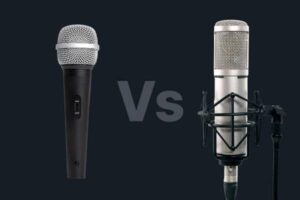
Condenser vs. Dynamic Mics
Condenser Mics: Very sensitive and great at capturing detail. They are best for quiet, treated rooms.
Dynamic Mics: Less sensitive to background noise. They are perfect if you are recording in a normal room with fan noise or traffic outside.
Polar Patterns (The Cardioid Standard)
Polar Patterns (The Cardioid Standard)For podcasting, you almost always want a Cardioid pickup pattern. This pattern captures sound from the front and ignores noise coming from the back and sides.
The Top 5 Best Microphones Under 5,000
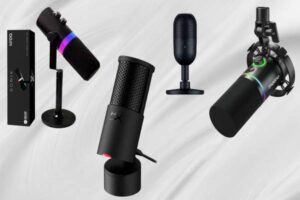
Here is our curated list of the best-performing microphones available in the budget segment.
FIFINE K669B: The King of Budget USB Mics
The FIFINE K669B has earned a legendary reputation among YouTubers and entry-level podcasters. It is a USB condenser microphone that punches far above its weight class.
Build and Design: It features a full metal body that feels incredibly sturdy. It comes with a small tripod stand that fits easily on any desk.
Sound Quality: The K669B offers a crisp, bright sound. It captures the nuances of the human voice very well, making it sound “airy” and professional.
Best Feature: It has a dedicated volume (gain) knob on the front, allowing you to adjust your input levels on the fly without touching your computer settings.
Verdict: If you have a strictly limited budget and want the simplest setup possible, this is the one.
Maono AU-A04: The Complete Podcast Starter Kit
If you are starting from scratch and have no accessories, the Maono AU-A04 is the best value-for-money deal. It isn’t just a mic; it’s a complete studio setup in one box.
- The Bundle: It includes a high-quality USB condenser mic, a professional boom arm (scissor stand), a shock mount to prevent vibrations, and a pop filter to stop “P” and “B” sounds from clipping.
- Performance: It supports a 192kHz/24bit sampling rate, which provides high-resolution audio. The cardioid pattern is very effective at isolating the speaker’s voice.
- Verdict: This is perfect for users who want their desk to look like a professional radio station while keeping costs low.
Boya BY-M1: The Portable Powerhouse

The Boya BY-M1 is a lavalier (clip-on) microphone. While it looks small, it is a favorite for many interview-style podcasts.
- Versatility: Unlike the others, this works with smartphones, DSLR cameras, and laptops. It’s perfect if you record your podcast while traveling or if you conduct in-person interviews.
- The Cable: It comes with a 20-foot (6-meter) cable, giving you immense freedom to move around.
- Pros: Extremely affordable (usually well under ₹1,000), very discrete, and easy to hide.
- Verdict: Best for mobile podcasters or those who record interviews on the go.
Zebronics Zeb-Podcast: The Reliable All-Rounder

Zebronics has created a dedicated podcasting microphone that bridges the gap between casual gaming mics and professional gear.
- User Interface: It features easy-access controls for volume and a built-in tripod that is more stable than most budget competitors.
- Sound Profile: It has a warm sound profile, which is very flattering for deep voices. It handles ambient noise reasonably well for a condenser mic.
- Verdict: A solid, reliable choice for Indian creators looking for a brand with local warranty support and decent performance.
AKG P120: The Professional’s Entry Point
The AKG P120 is the only XLR microphone on this list. While it sits right at the edge of the 5,000 price point, it offers true studio-grade quality.
- The Sound: AKG is a world-renowned audio brand. The P120 provides a very flat, natural frequency response. It doesn’t “color” your voice, giving you the most realistic recording.
- Advanced Features: It includes a -20dB pad (for very loud sound sources) and a bass-cut filter to remove low-end rumble (like the sound of an AC or a distant truck).
- Requirement: Remember, you will need an XLR cable and an Audio Interface to use this.
- Verdict: Choose this if you plan to upgrade your gear slowly and want a microphone that will last you for years.
Professional Tips to Make a Cheap Mic Sound Expensive
Even a 50,000 microphone will sound bad in a bad room. Follow these tips to get the most out of your budget mic:
- The “6-Inch Rule”: Stay about 6 to 8 inches away from the mic. If you are too close, your voice will sound distorted (proximity effect). If you are too far, it will sound thin and echoey.
- Sound Treatment: You don’t need acoustic foam. Surround your recording area with soft materials like pillows, blankets, or heavy curtains. These absorb sound reflections and stop that “empty room” echo.
- Turn Off the Fans: Especially in India, ceiling fans are the biggest enemy of clear audio. Turn them off during the 20-30 minutes of recording. Your listeners will thank you.
- Use Audacity: Use the free software Audacity to edit. Use the “Noise Reduction” effect to remove the slight hiss that budget USB mics often have.
- Use a Pop Filter: If your mic didn’t come with one, buy a cheap one or stretch a pair of stockings over a wire loop. It prevents “plosives” (the wind from your mouth hitting the mic) from ruining your take.
Conclusion
Starting your podcasting journey doesn’t require a massive investment. The FIFINE K669B and Maono AU-A04 are incredible starting points for those who want ease of use. If you need portability, the Boya BY-M1 is your best friend. For those aiming for professional growth, the AKG P120 is an investment in your future.
Frequently Asked Questions (FAQs)
Can I start a podcast with just my phone?
Yes! You can use the Boya BY-M1 with your phone to get significantly better audio than the built-in phone mic.
Does a more expensive mic mean better content?
No. Content is king. A high-end mic only makes a good story easier to hear. Focus on your script and your delivery first.
Is a USB mic better than an XLR mic?
For beginners, yes, because it is cheaper and easier to set up. For professionals, no, because XLR offers more control and better sound quality.